when queer intimacy stepped into the sun.

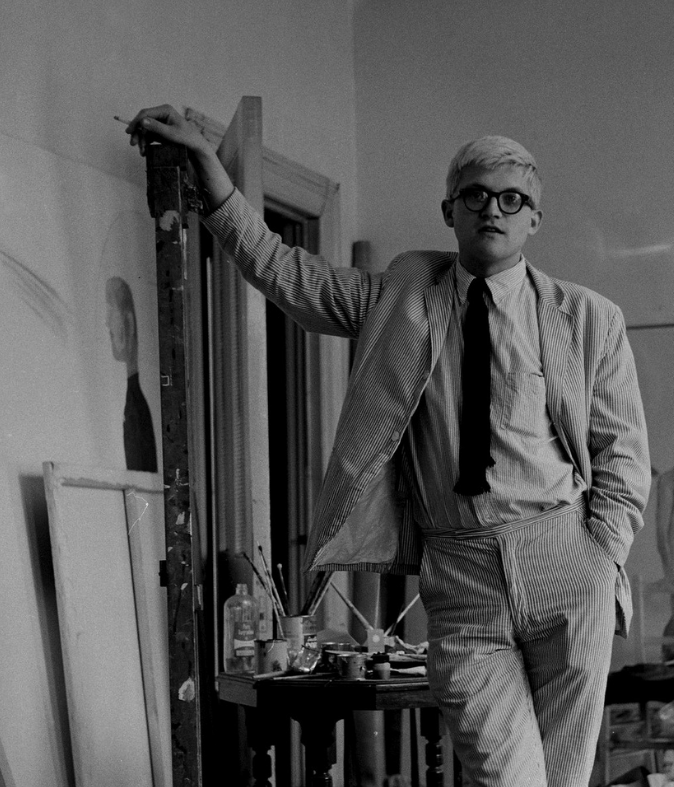
How David Hockney painted queer life out of the shadows.
Born in 1937 in Bradford, England, Hockney came of age in a country where homosexuality was still illegal. By the time of his death at 88, he had become one of the most celebrated artists in the world, known for his sun-drenched swimming pools, vivid colors, and unmistakable California light.
But Hockney's greatest contribution may not have been what he painted. It was who he painted.
painting queer life in broad daylight.
When Hockney moved to Los Angeles in 1964, he found something that felt almost unimaginable in postwar Britain: sunshine, freedom, and the possibility of living openly as a gay man. Three years later, homosexuality would be partially decriminalized in England and Wales.
His paintings captured that sense of possibility.
Works like Peter Getting Out of Nick's Pool (1966), A Bigger Splash (1967), and Portrait of an Artist (Pool with Two Figures) (1972) weren't just studies of water and light. They offered a new vision of queer life: visible, beautiful, and entirely unashamed.

The radical thing about Hockney's work wasn't sex. It was sunlight.
the politics of queer joy.
Much of queer history is told through struggle, and rightly so. Hockney painted something else. Pools. Friends. Lovers. Summer afternoons. The quiet intimacy of being seen.
At a time when queer lives were often hidden from public view, Hockney put them at the center of the canvas. Not as a statement. Not as a controversy. Simply as people deserving beauty.
That mattered. Because before visibility becomes policy, it becomes culture.
why it still resonates.
In 2018, Portrait of an Artist (Pool with Two Figures) sold for $90.3 million, setting a record for a living artist at the time. More than fifty years after it was painted, audiences were still drawn to the same thing: a work that captures longing, connection, and the space between two people.

This Pride Month, Hockney's legacy feels especially relevant. Long before queer visibility became a movement, he was painting a life many people had never seen before.
Not hidden. Not coded. Just out in the sun.